Guide
How to Read a Hygrometer at Home
Two numbers on a dial: how warm the air is, and how much water it is holding.
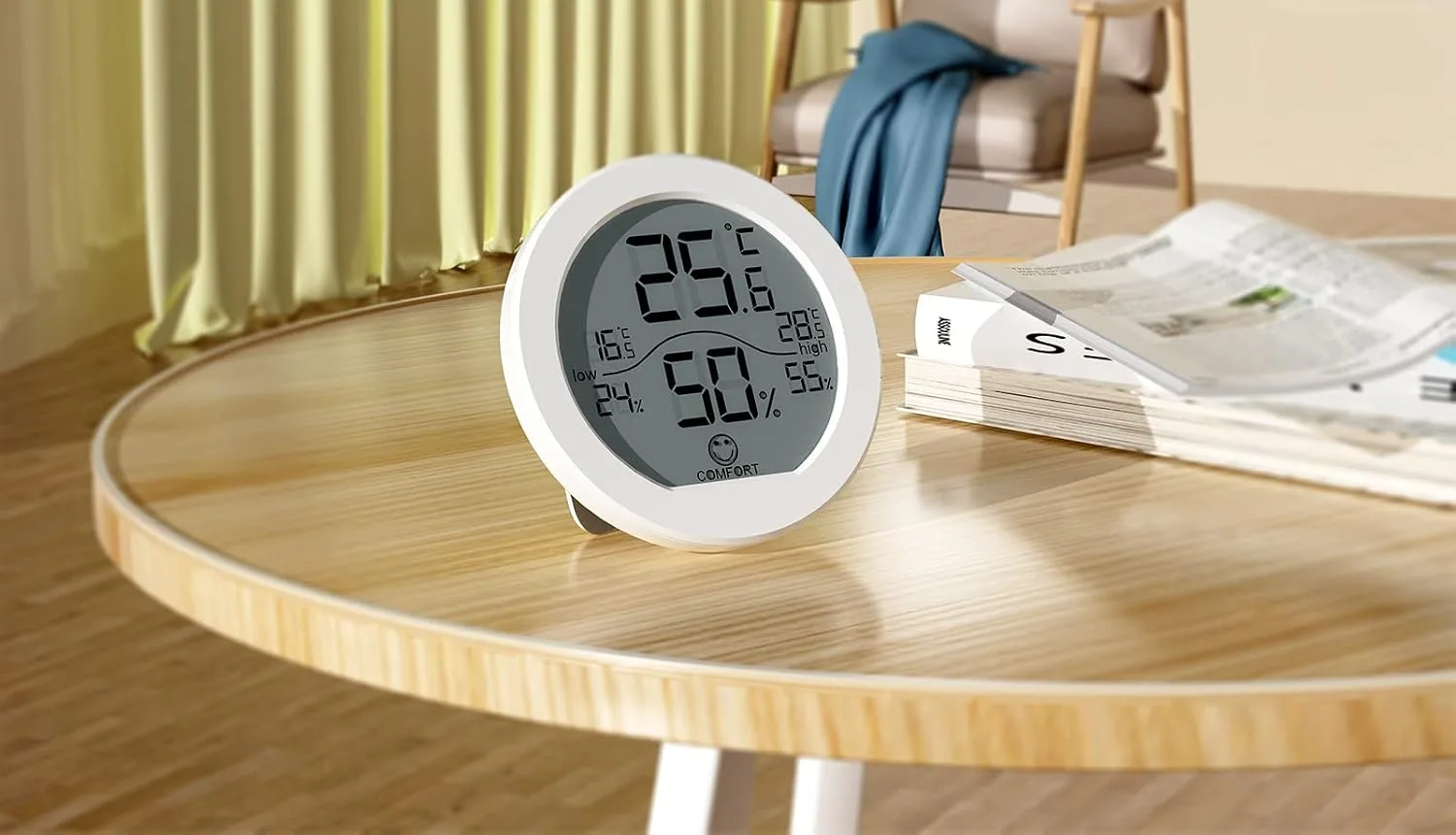
What humidity should a home be?
Between 30 and 50 percent if you can, and below 60 in any case. The Environmental Protection Agency gives that target in its guide to mould and moisture:
If possible, keep indoor humidity below 60 percent (ideally between 30 and 50 percent) relative humidity.
Below 30 percent, skin, wood and sinuses dry out. Above 60, mould has what it needs. The comfort face on a KR-TH1 covers a slightly different band, 40 to 70 percent, so read the number as well as the face.
Where should a hygrometer stand?
Stand a KR-TH1 at chest height on an inside wall or an open shelf, away from the things that fool it.
That means not above a radiator, not in direct sun, and not beside a kettle or a shower door.
Give it time. A KR-TH1 refreshes every 10 seconds, but a dial carried in from a cold car needs a few minutes to settle.
-
Monitor
SECRUI KR-TH1 Room Thermometer and Hygrometer
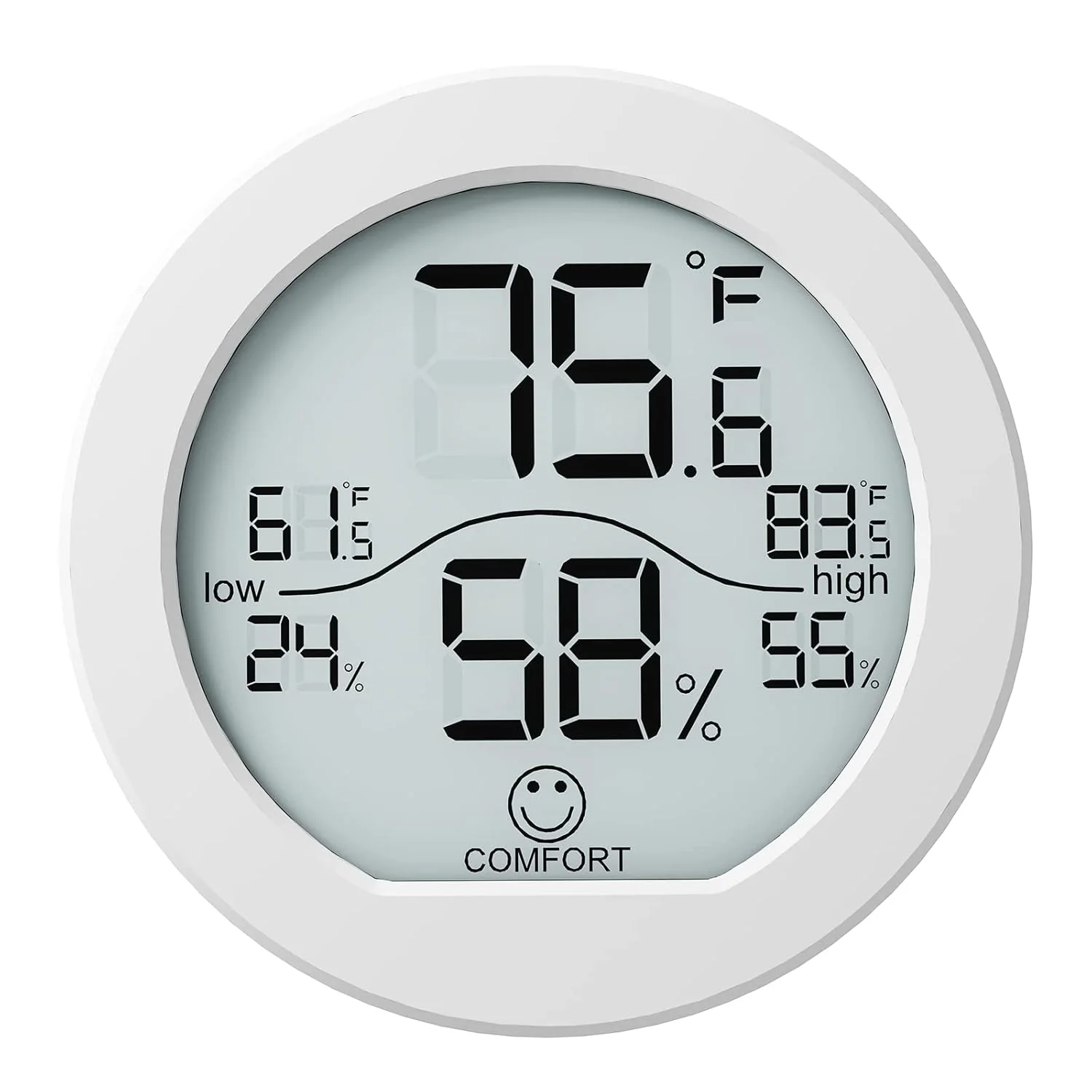
A round dial that shows temperature, humidity and the day's highs and lows.
from $8.99
Ring It Up on Amazon -
Monitor
SECRUI Wireless Indoor Outdoor Thermometer
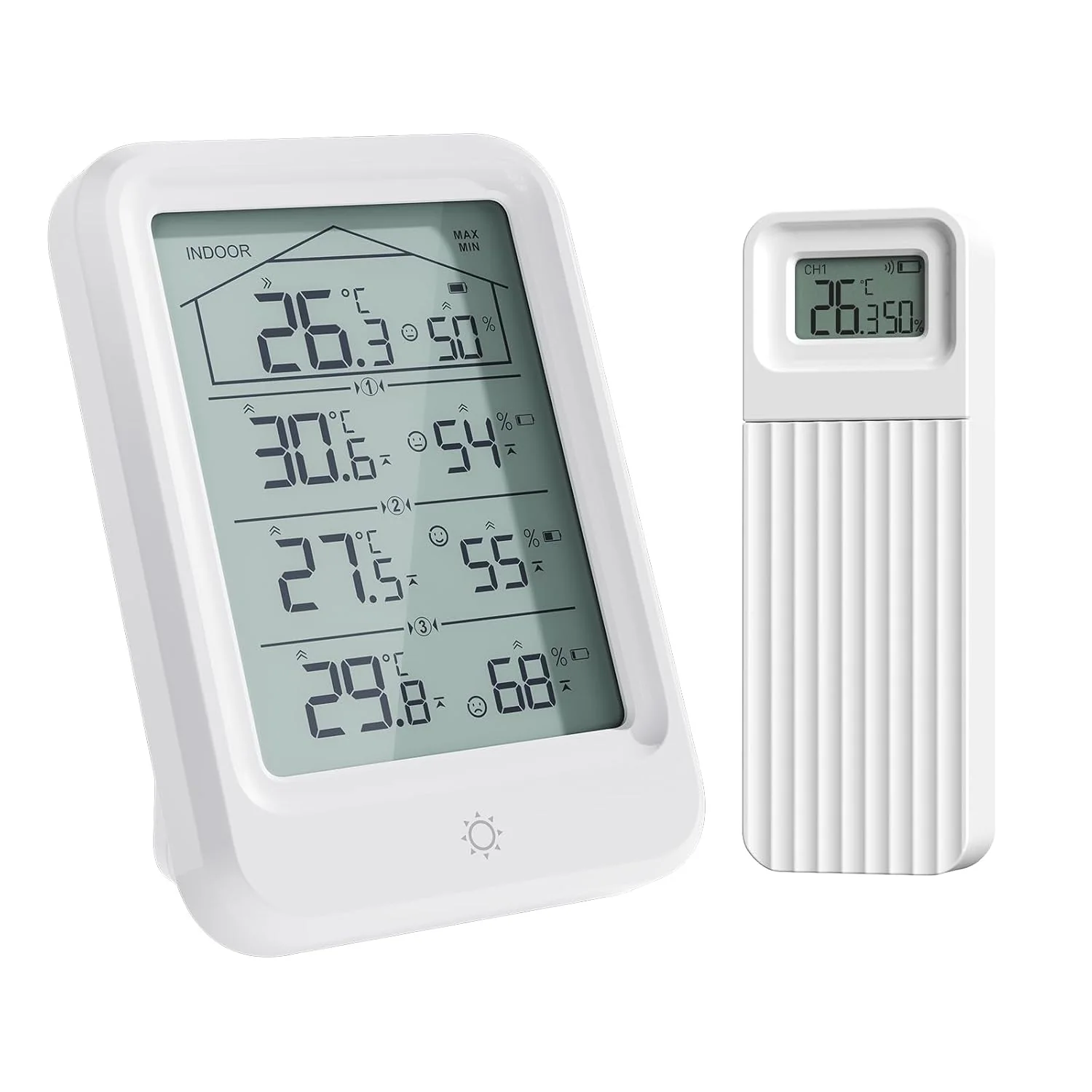
A backlit base station that shows the porch, the garage and the nursery on one screen.
from $19.99
Ring It Up on Amazon
What do the small high and low numbers tell you?
They tell you what happened while you were not looking: a bedroom that reads 45 percent at noon and shows a high of 70 had a damp night.
Most likely the window was shut and the door closed.
Reset the highs and lows when you change something, such as a dehumidifier or a new habit with the bathroom fan. Then read them again after a day.
| Model | Accuracy | Reads from | Price from |
|---|---|---|---|
| KR-TH1 Room Thermometer and Hygrometer | ±1°F, ±2 to 3% RH | The dial itself | $8.99 |
| Wireless Indoor Outdoor Thermometer | ±0.54°F, ±3% RH | Up to 3 sensors, 400 ft open air | $19.99 |
| Bluetooth Hygrometer, 3-Pack | See the app | HumiTemp app over Bluetooth | $39.99 |
When is one dial not enough?
When the problem is in a room you do not sit in. A crawl space, a garage or a porch is a job for the Wireless Indoor Outdoor Thermometer, which shows up to 3 remote sensors on one screen.
When you need to see a whole week, the Bluetooth pack keeps a chart.
Sources
- U.S. Environmental Protection Agency, A Brief Guide to Mold, Moisture and Your Home, read 2 October 2026